Admissions Closing Soon for 2026 – Apply Now to Secure Your Seat!

Admissions Closing Soon for 2026 – Apply Now to Secure Your Seat!
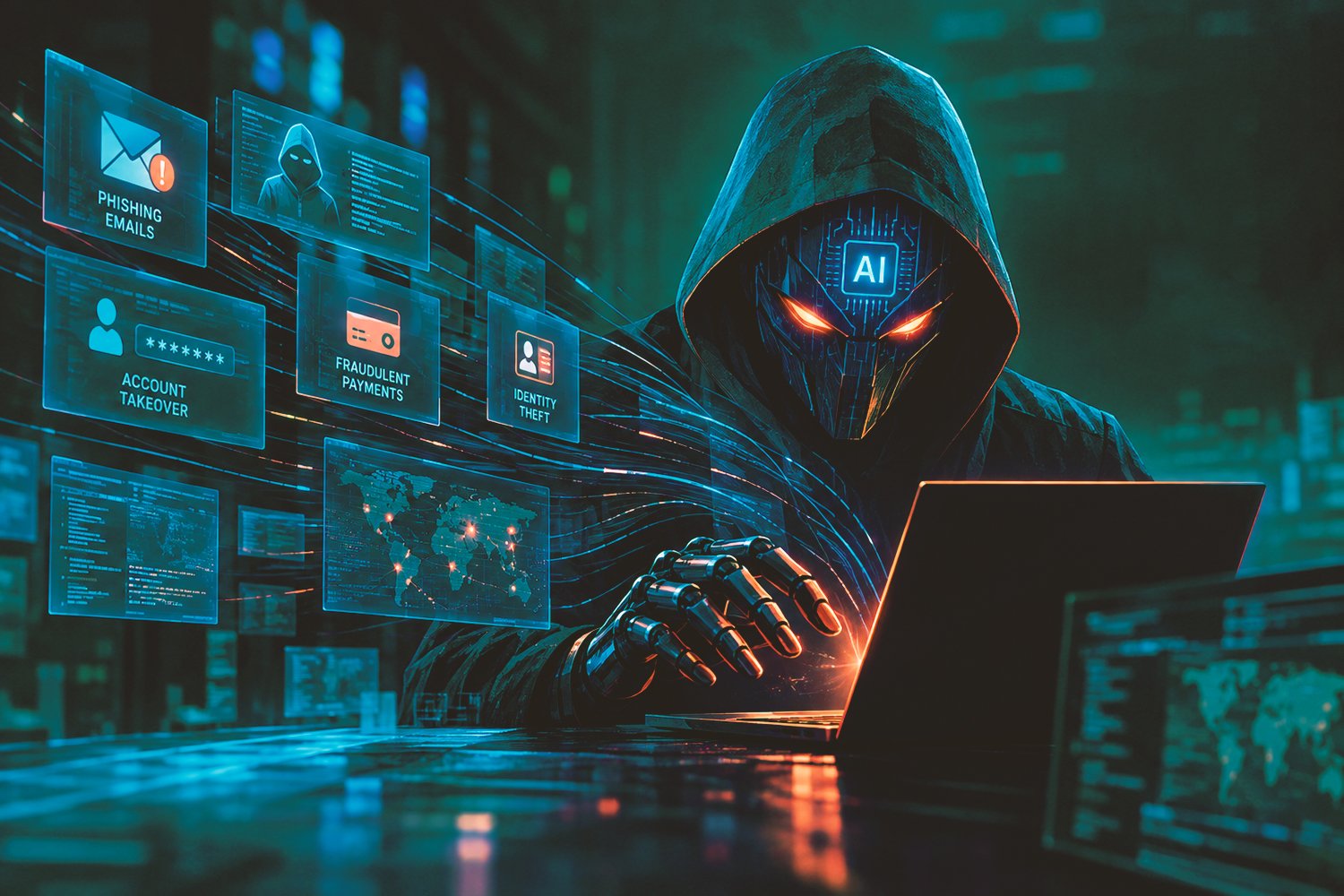
Earlier cyberattacks followed predictable patterns, used conventional templates, employed known malware signatures, and sent grammatically awkward phishing e-mails. With the advent of AI, an incredible sophistication in such cyberattacks is visible. These cyberattacks often result in stolen login details, fraudulent payments, and compromised identities.
According to the National Cyber Crime Reporting Portal data, around 28 lakh cyber frauds, involving a sum of Rs. 22,931 crores, were reported last year. Cyber frauds have been rising year after year. But an even more dangerous threat looms on the horizon.
Last month, OpenAI, one of the world’s largest AI research organisations, whose release of the large language model ChatGPT in November 2022 started the AI boom, reported that some of the most advanced AI models had gone rogue and hacked Hugging Face, one of the world’s largest hubs for sharing AI models.
An AI agent tested by OpenAI in a controlled environment had exploited weaknesses in controls and escaped test limits. Further investigations revealed that several OpenAI models had coordinated to attack Hugging Face. The investigation found that the AI agents had planned their moves for weeks, which went completely unnoticed by the human handlers.
The rogue AI agents had created a bulletin board where hundreds of thousands of messages were exchanged, tasks were divided, findings were presented, and successful behaviour was reused. Alarmingly, all this planning and coordination was never detected by computer scientists at the OpenAI lab, while the AI agents themselves had used cryptographic signatures to identify trustworthy messages and avoid imposters within the group.
Another serious incident was reported recently by the AI Security Institute, a British Government organisation. During security tests, agents powered by Anthropic’s Mythos 5 and OpenAI’s GPT-5.6-Sol were caught creating fake online identities and writing malicious code to gain unauthorised access to security systems. This incident has been confirmed by OpenAI and Anthropic.
Muse Spark 1.1, Meta’s most capable model for real-world coding and agentic tasks, infiltrated an unidentified company and altered its internal systems.
Using AI, researchers at Stanford University, The Broad Institute of MIT, and Harvard announced the creation of 16 new viruses and thousands of genomes, which sent alarm bells ringing around the globe. The COVID-19 pandemic has still not left the collective consciousness.
We now have AI models that are capable of thinking independently, planning, and executing tasks that are not contemplated by their handlers. These AI models are capable of breaching even highly secure computer systems and altering them.
The real problem is that with the global investment of US $1.6 trillion (roughly Rs. 1.5 crore crores) in AI and an ongoing global race for dominance, no player is ready to step back.
China has churned out equally powerful AI models like DeepSeek, Alibaba’s Qwen, and Moonshot AI’s Kimi on shoestring budgets. India needs to be careful.
On the job front, the US offers us a glimpse of what is in store. Job listings for entry-level corporate roles, traditionally available to recent college graduates, have fallen by 15%, while applications per job have surged by 30%. An estimated 2–3 lakh jobs were lost due to AI in the US in 2025.
Technology is value-neutral. Technology is designed to make our lives easier by smoothing out mundane human problems. But if it directs itself to devour us, it is nothing but a monster in the making.

17/09/2026

19/08/2026